Disclosure: As an Amazon Associate I earn from qualifying purchases. This means if you click on a link and make a purchase, I may receive a small commission at no extra cost to you.
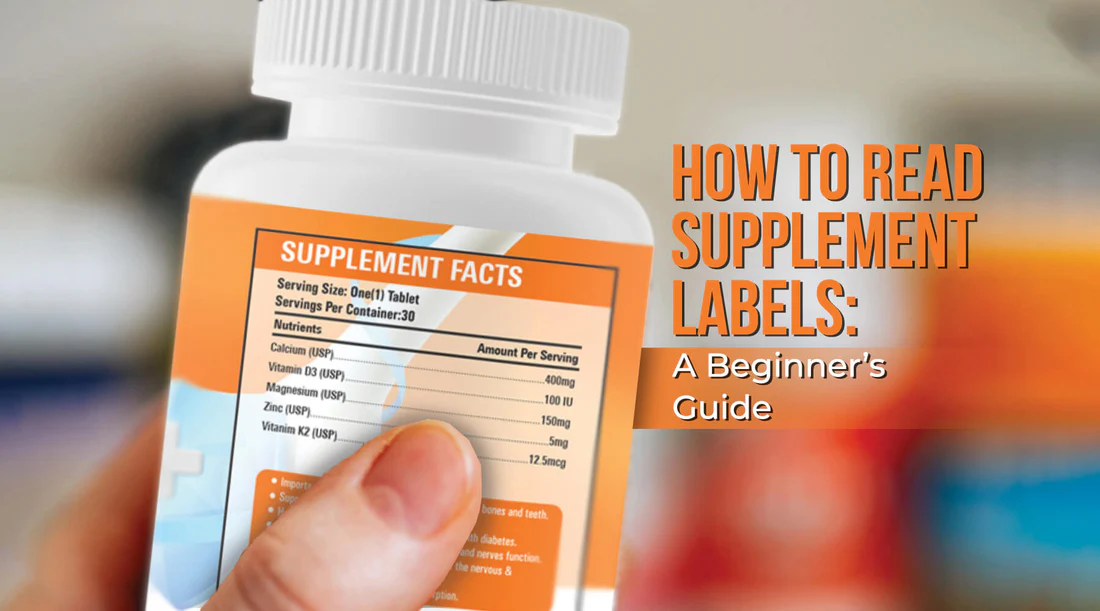
Most people pick up a supplement, look at the front of the tub, and buy based on whatever the marketing claims say. That is exactly what supplement companies are counting on. The real information is on the back — and knowing how to read it can save you hundreds of pounds and protect you from buying garbage.
Here is a practical guide to reading supplement labels like a pro. Once you learn this, you will never waste money on a bad product again.
The Front Label vs The Back Label
The front is marketing. It is designed to sell. Bold claims, impressive numbers, flashy graphics. Companies can say almost anything on the front as long as they do not make specific medical claims.
The back is the truth. The nutritional information panel and ingredients list are regulated by UK food law. This is where you find what is actually in the product and how much of each ingredient you are getting.
Always flip the tub over. The back label tells you everything you need to know.
The 7 Things to Check on Every Supplement Label
1. Serving Size
This is the first thing to check and the most common trick companies use. A product might advertise “25g of protein!” on the front, but the serving size might be 40g of powder — meaning the protein ratio is only 62.5%, which is poor.
What to look for:
- For protein: Divide protein per serving by serving size. Above 70% is acceptable, above 80% is good
- For creatine: Should be 3-5g per serving with no fillers
- For vitamins: Check the percentage of NRV (Nutrient Reference Value)
Example: ON Gold Standard has 24g protein from a 30g scoop = 80% protein ratio. Applied Nutrition has 22g from 30g = 73%. Both are good. Anything below 65% means you are paying for filler.
2. Ingredients List (Order Matters!)
Ingredients are listed in order of quantity — the first ingredient is what there is most of, the last is what there is least of. This is legally required in the UK.
What to look for:
- The main active ingredient should be listed FIRST
- In protein: “whey protein isolate” or “whey protein concentrate” should be first
- In creatine: “creatine monohydrate” should be the only ingredient (plus maybe flavouring)
- Avoid products where sugar, maltodextrin, or fillers appear before the active ingredient
Red flag example: A “protein powder” where the first ingredient is maltodextrin. That means there is more sugar than protein. You are buying a sugar shake, not a protein shake.
3. Proprietary Blends (The Biggest Red Flag)
A proprietary blend lists a group of ingredients under one name with only the total weight, not individual amounts. For example:
“Performance Matrix (5,000mg): Citrulline Malate, Beta-Alanine, Creatine, Taurine, L-Tyrosine”
This tells you the total blend is 5g, but you have no idea how much of each ingredient you are getting. For all you know, it could be 4,900mg of the cheapest ingredient (taurine) and 25mg each of everything else.
The rule: If a company hides individual doses behind a proprietary blend, they are almost certainly underdosing the expensive ingredients. Avoid these products. Reputable brands list every ingredient with its exact dose.
4. Active Ingredient Forms
The same vitamin or mineral can come in very different forms — some well absorbed, some barely absorbed at all. Companies often use the cheapest form to maximise profit.
| Supplement | Good Form ✅ | Cheap/Poor Form ❌ |
|---|---|---|
| Magnesium | Glycinate, Citrate, Malate | Oxide (only 4% absorbed) |
| Vitamin B12 | Methylcobalamin | Cyanocobalamin |
| Folate (B9) | Methylfolate (5-MTHF) | Folic acid |
| Zinc | Zinc picolinate, citrate | Zinc oxide |
| Iron | Iron bisglycinate | Ferrous sulfate (stomach issues) |
| Creatine | Monohydrate | HCL, ethyl ester (overpriced) |
I go into more detail on magnesium forms in my magnesium comparison guide and B vitamin forms in my B-Complex review.
5. % NRV (Nutrient Reference Value)
For vitamins and minerals, labels show the percentage of your daily Nutrient Reference Value. This tells you how much of your recommended daily intake one serving provides.
What to look for:
- 100% NRV is the minimum recommended daily intake — not necessarily the optimal amount
- For Vitamin D in the UK, the NRV is only 200iu — most experts recommend 2000-4000iu (see my Vitamin D guide)
- Very high percentages (5,000%+ NRV) for water-soluble vitamins are generally safe but unnecessary — your body excretes the excess
- Be careful with fat-soluble vitamins (A, D, E, K) — these can accumulate, so extremely high doses are not recommended without medical advice
6. Allergens and Intolerances
UK food law requires allergens to be highlighted in bold on labels. Common allergens in supplements include:
- Milk/dairy: Present in whey and casein protein
- Soy: Soy lecithin is used as an emulsifier in many protein powders
- Gluten: Sometimes found in cheaper supplements as a filler
- Shellfish: Present in krill oil and some joint supplements (glucosamine)
- Eggs: Some multi-collagen products contain eggshell membrane
If you have allergies or intolerances, always check the allergen statement at the bottom of the ingredients list. Also look for “may contain” warnings about cross-contamination.
7. Third-Party Testing and Certifications
The best supplements carry independent third-party certifications. Look for:
| Certification | What It Means | Why It Matters |
|---|---|---|
| Informed Sport | Tested for banned substances | Essential for competitive athletes |
| GMP Certified | Good Manufacturing Practice | Ensures consistent quality and safety |
| ISO Certified | International quality standards | Factory meets global standards |
| Vegan Society | No animal ingredients | Verified vegan product |
| Soil Association | Organic certification | Genuine organic ingredients |
Not all good products have these certifications (they are expensive to obtain), but their presence is a strong positive signal. ON Gold Standard, for example, carries Informed Sport certification.
Common Label Tricks to Watch For
The “Per Two Scoops” Trick
Some products list nutritional info per two scoops but most people only take one. This makes the protein content look double what you actually get per serving. Always check the serving size.
The “Amino Spiking” Trick
Some cheap protein brands add free-form amino acids (like glycine or taurine) to their formula. These amino acids register as “protein” on lab tests but are not the same as complete protein. If you see individual amino acids high on the ingredients list of a protein powder, be suspicious.
The “Matrix” or “Blend” Trick
Grouping ingredients into fancy-sounding blends (“Anabolic Matrix”, “Performance Fuel Complex”) to hide individual doses. See the proprietary blend section above.
The “Fairy Dust” Trick
Adding a tiny amount of an expensive ingredient just so they can put it on the label. “Contains ashwagandha!” — but only 50mg when the effective dose is 600mg. Technically true, practically useless.
A Quick Label-Reading Checklist
| Check | What to Look For | Red Flag |
|---|---|---|
| Serving size | Reasonable and clearly stated | “Per 2 scoops” in small print |
| First ingredient | The active ingredient you are buying | Sugar, maltodextrin, or filler first |
| Individual doses | Every ingredient with exact amount | Proprietary blends hiding doses |
| Ingredient forms | Bioavailable forms (glycinate, methylated) | Cheap forms (oxide, cyanocobalamin) |
| Unnecessary extras | Short, clean ingredient list | 20+ ingredients with tiny doses |
| Allergens | Clearly labelled and highlighted | Missing or unclear allergen info |
| Certifications | Third-party testing logos | No certifications, unknown brand |
Frequently Asked Questions
Are supplement labels regulated in the UK?
Yes. Food supplements are regulated under the Food Supplements Regulations 2003. Nutritional claims must be substantiated and ingredients must be accurately listed. However, enforcement is not as strict as for medicines, which is why label-reading skills matter — some companies push the boundaries of what is acceptable.
What does “natural flavouring” mean?
It means the flavouring is derived from a natural source but it can still be heavily processed. “Natural” does not necessarily mean healthy or unprocessed. It is largely a marketing term.
Should I avoid all artificial sweeteners in supplements?
Sucralose and stevia are the most common sweeteners in supplements. At the small amounts used in a protein scoop, they are considered safe by UK and EU food safety authorities. If you prefer to avoid them, look for unflavoured supplements.
Why do some products list ingredients I cannot pronounce?
Chemical names of vitamins and minerals look scary but are often the proper names of common nutrients. “Cholecalciferol” is just Vitamin D3. “Pyridoxine hydrochloride” is Vitamin B6. The long name does not make it dangerous.
The Bottom Line
Learning to read supplement labels takes 5 minutes but saves you hundreds of pounds over time. Flip the tub over, check the ingredients, verify the doses, and ignore the marketing on the front.
The best supplements have short, transparent ingredient lists with proper doses of quality forms. If a company hides behind proprietary blends or packs their product with cheap fillers, take your money elsewhere.
For my recommendations on products that pass the label test with flying colours, check out my reviews:
- Best Whey Protein UK
- Best Creatine UK
- Best Magnesium UK
- Supplements That Are a Waste of Money
- My Complete Supplement Stack
Last updated: March 2026. This guide is for educational purposes. All supplement labels in the UK must comply with the Food Supplements Regulations 2003.