Disclosure: As an Amazon Associate I earn from qualifying purchases. This means if you click on a link and make a purchase, I may receive a small commission at no extra cost to you.
This is one of the most asked questions in fitness, and one of the most overcomplicated. Every fitness influencer seems to have a different answer. Some say 1g per pound of bodyweight. Others say 2g per kg. Some say you need protein every 3 hours or your muscles will fall off.
Let me cut through the noise and give you a straightforward answer based on what the actual research says and what has worked for me personally after years of training.
The Short Answer
If you train regularly and want to build or maintain muscle, aim for 1.6g to 2.2g of protein per kilogram of bodyweight per day.
That is it. That is the answer backed by the majority of research. Everything else is detail.
What Does That Look Like in Practice?
| Your Bodyweight | Minimum (1.6g/kg) | Optimal (2.0g/kg) | Maximum (2.2g/kg) |
|---|---|---|---|
| 60kg / 132lbs | 96g | 120g | 132g |
| 70kg / 154lbs | 112g | 140g | 154g |
| 80kg / 176lbs | 128g | 160g | 176g |
| 90kg / 198lbs | 144g | 180g | 198g |
| 100kg / 220lbs | 160g | 200g | 220g |
For most people training 3-5 times per week, aiming for roughly 2g per kg is the sweet spot. It is easy to remember and falls right in the middle of the optimal range.
Where Does This Number Come From?
The most comprehensive meta-analysis on this topic was published in the British Journal of Sports Medicine in 2018. Researchers analysed 49 studies with 1,863 participants and concluded that protein intakes above 1.62g per kg per day did not further contribute to resistance training-induced gains in muscle mass.
However, they also noted that the upper confidence interval was 2.2g per kg, meaning some individuals may benefit from going slightly higher. This is why the recommended range is 1.6 to 2.2g per kg.
But What About 1g Per Pound?
The old bodybuilding rule of “1 gram of protein per pound of bodyweight” actually lines up pretty closely with the research. For an 80kg (176lb) person, 1g per pound would be 176g — which is exactly 2.2g per kg. So the bros were not wrong, they just arrived at the answer differently.
The reason I prefer using the metric system is because it is more precise and the research is conducted using kilograms. But if “1g per pound” is easier for you to remember, go with that — you will be fine.
Does It Matter When You Eat Your Protein?
Total daily intake matters far more than timing. That said, there are some general guidelines worth following:
- Spread it across 3-5 meals — this is slightly better for muscle protein synthesis than cramming it all into one or two meals
- Have some protein within a few hours of training — the “anabolic window” is not as small as people think, but getting protein in the general timeframe around your workout is a good habit
- Have protein before bed — research shows that casein or a protein-rich snack before sleep can support overnight recovery
But honestly, if you are hitting your total daily target, you are doing 90% of what matters. Do not stress about timing.
Can You Eat Too Much Protein?
For healthy adults, eating more protein than you need is not dangerous. Your kidneys can handle it just fine. The worst that happens is the excess gets used for energy or stored — it does not magically turn into extra muscle.
Going above 2.2g per kg is unlikely to give you any additional muscle-building benefit. You would just be spending more money on protein for no extra return.
The one exception: if you have pre-existing kidney disease, high protein intake can be problematic. Consult your doctor in that case.
How to Hit Your Protein Target
High-Protein Foods (per 100g)
| Food | Protein per 100g | Calories per 100g |
|---|---|---|
| Chicken breast | 31g | 165 kcal |
| Turkey breast | 29g | 135 kcal |
| Lean beef mince (5%) | 21g | 137 kcal |
| Salmon | 20g | 208 kcal |
| Tuna (tinned) | 25g | 116 kcal |
| Eggs (2 large) | 13g | 155 kcal |
| Greek yoghurt (0%) | 10g | 59 kcal |
| Cottage cheese | 11g | 98 kcal |
| Whey protein (1 scoop) | 22-24g | 110-121 kcal |
A Sample Day Hitting 160g Protein (80kg Person)
| Meal | Food | Protein |
|---|---|---|
| Breakfast | 3 eggs + 2 toast + Greek yoghurt | ~30g |
| Lunch | Chicken breast + rice + vegetables | ~40g |
| Post-workout | Whey protein shake (1 scoop) | ~24g |
| Dinner | Lean beef mince + pasta | ~35g |
| Snack | Cottage cheese + fruit | ~15g |
| Before bed | Whey protein shake (1 scoop) | ~24g |
| Total | ~168g |
Notice that you can hit 160g+ with real food and just 1-2 protein shakes. Supplements are there to fill the gap, not replace meals.
Where Whey Protein Fits In
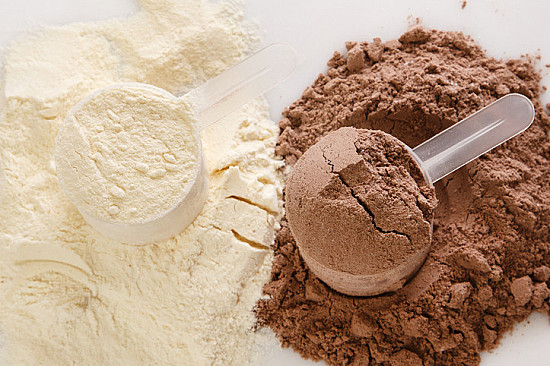
Most people struggle to hit their protein target from food alone. This is where whey protein becomes genuinely useful — it is a convenient, cost-effective way to add 22-24g of protein per serving.
One or two scoops per day on top of your normal meals is usually enough to bridge the gap. I personally use whey protein twice a day — post-workout and sometimes before bed.
If you are looking for a good protein powder, I have tested all the major UK brands. Here are my top recommendations:
- Optimum Nutrition Gold Standard — best overall quality and taste
- Applied Nutrition Critical Whey — best value for money
- Full comparison of the top 5 UK proteins
Common Mistakes
Mistake 1: Thinking protein shakes are magic
A protein shake is just food in liquid form. It is not going to build muscle on its own. It is simply a convenient way to increase your total protein intake.
Mistake 2: Not tracking at all
You do not need to weigh every gram of food forever. But tracking your intake for just one week with an app like MyFitnessPal can be eye-opening. Most people overestimate how much protein they eat by 30-40%.
Mistake 3: Getting all protein from shakes
Real food should always be the foundation. Protein shakes are supplements — they supplement your diet, not replace it. Aim for at least 70% of your protein from whole foods.
Mistake 4: Worrying about protein timing more than total intake
Whether you eat protein at 7am or 7pm matters far less than whether you hit 160g total by the end of the day. Get the total right first, then optimise timing if you want to.
Frequently Asked Questions
Do I need more protein if I am trying to lose fat?
Yes, actually. When you are in a calorie deficit, keeping protein high (2.0-2.4g per kg) helps preserve muscle mass while you lose fat. This is one of the most important nutritional strategies for body recomposition.
Is too much protein bad for your kidneys?
No — not for healthy people. This myth comes from studies on people with existing kidney disease. Multiple long-term studies have shown no negative effects of high protein intake on kidney function in healthy adults.
Do women need less protein than men?
The recommendation per kg of bodyweight is the same regardless of gender. Women typically weigh less, so their absolute number will be lower, but the ratio (1.6-2.2g per kg) stays the same.
What if I am vegetarian or vegan?
Plant-based proteins are generally less bioavailable than animal proteins, so aiming for the higher end of the range (2.0-2.2g per kg) is a good idea. Combining different plant protein sources throughout the day helps ensure you get all essential amino acids.
Is 100g of protein per day enough?
Depends on your bodyweight. For someone weighing 60kg, 100g (1.67g per kg) is within the optimal range. For someone weighing 90kg, 100g (1.1g per kg) is below the recommended minimum for muscle building. Use the table above to find your personal target.
The Bottom Line
Stop overcomplicating it. Aim for roughly 2g of protein per kg of bodyweight per day. Eat most of it from real food. Use a good whey protein to fill the gap. Track your intake for a week to make sure you are actually hitting your target.
That is genuinely all there is to it. The rest is just noise.
Read more:
- Best Whey Protein UK 2026: Full Comparison
- ON Gold Standard Review
- Applied Nutrition Critical Whey Review
- My Complete Daily Supplement Stack
Last updated: March 2026. This article is for informational purposes only and is not medical advice. Consult a healthcare professional if you have specific dietary concerns.